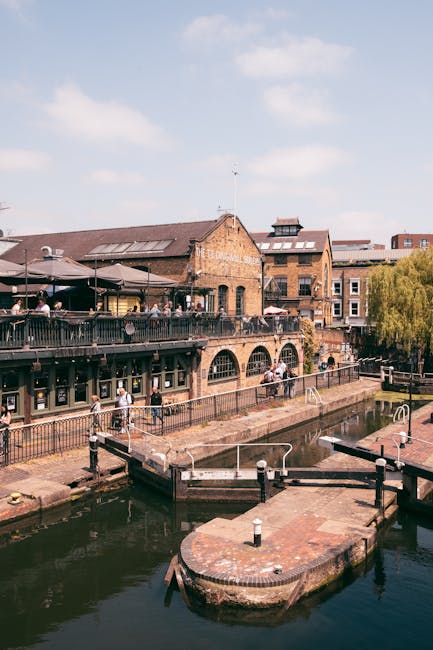
Regents Canal access guide for Camden removals
Posted on 09/08/2026
If you are planning a move near the canal, you already know the issue is not the boxes. It is the access. A narrow street, a bridge, a towpath, a loading bay that disappears at the wrong time, and suddenly a straightforward Camden move becomes a bit of a chess game. This Regents Canal access guide for Camden removals is here to make that part easier.
Whether you are moving a flat by Camden Lock, a studio near the waterside, or an office tucked behind a busy canal-side road, the same principle applies: good access planning saves time, stress, and awkward lifting. In Camden, that matters even more because the area mixes busy traffic, pedestrian-heavy routes, older buildings, and canal-adjacent properties that can be lovely to live in but not always simple to move into. Let's make it practical.
For more background on moving in the area, you may also find the local perspective in Camden removals for Camden Lock and Chalk Farm moves and the broader advice in man and van tips for moving near Camden Market NW1.

Why Regents Canal access guide for Camden removals Matters
Canal-side moving sounds simple on paper. There is water on one side, a path on the other, and a property somewhere in the middle. In real life, though, the access route can make or break the move. A van may not be able to stop where you expect. A towpath might be too narrow for trolleys. A bridge, bollard, gate, or stairwell can add several trips. And if you are moving during a busy period, there is usually at least one cyclist, dog walker, or delivery rider appearing at exactly the wrong time. Typical Camden, really.
This guide matters because removal planning in canal areas is about reducing friction before it appears. You are not just moving objects. You are managing distance, timing, parking, protection, and safe handling. The better you understand the access points around Regents Canal, the more smoothly your removal team can work, especially if you are using a compact vehicle or a man and van service in Camden for a tighter loading location.
It also matters for protecting your belongings. More steps, more turns, and more carrying through shared entrances means a greater chance of knocks and scuffs if the plan is not right. For fragile items, that can become expensive quickly. For bulky furniture, it can become physically awkward. And for anyone moving on a deadline, awkward is the last thing you want.
Canal access is also about neighbours. Many waterside buildings have shared circulation space, quieter residential feel, and limited tolerance for noisy, repeated trips. A well-organised move is simply more considerate. That is a small thing, perhaps, but in Camden small things matter a lot.
How Regents Canal access guide for Camden removals Works
The process is not mysterious; it is mostly about looking at the move in layers. First comes the arrival route. Then the stopping point. Then the walking route from vehicle to property. After that, you assess stairs, lifts, door widths, internal corridors, and any restrictions on where a van can legally stop. A good access plan connects all those dots before moving day.
In canal areas around Camden, access often falls into one of a few patterns:
- Front-road access: The van can stop close to the entrance, which is usually the easiest scenario.
- Rear or side access: Better for some buildings, but only if gates, courtyards, or alleyways are wide enough.
- Shared pedestrian access: Common near waterside developments and often slower, because you may need to work around residents or visitors.
- Canal-towpath-adjacent access: Potentially useful for very specific properties, but usually the most sensitive in terms of width, surface, and foot traffic.
Once the route is clear, the next step is deciding what kind of removal setup fits. For example, a smaller vehicle and crew may be more efficient if the stop is close but space is tight. A larger van may suit bulkier loads if parking and loading are straightforward. If you want a broader overview of the available moving options, the services overview is a good place to understand how different removal types line up with different access conditions.
In practical terms, the guide works best when you think like a mover and like a resident at the same time. Ask: where does the vehicle stop? How far is the carry? What happens if the lift is out of use? What if a sofa will not turn the corner? Those are the questions that save a move from becoming a long afternoon of muttered apologies and heavy breathing.
Key Benefits and Practical Advantages
Good Regents Canal access planning is not just about convenience. It has a direct effect on time, cost, safety, and the condition of your belongings. The main benefits are surprisingly tangible.
- Faster loading and unloading: Shorter carry distances usually mean less time spent on the job.
- Lower risk of damage: Fewer stair turns, less squeezing through tight gaps, fewer accidental bumps.
- Less physical strain: This matters more than people expect, especially with wardrobes, books, or white goods.
- Better parking efficiency: In busy parts of Camden, knowing where a vehicle can stop is half the battle.
- Cleaner communication with neighbours or building management: People appreciate a move that feels organised, not improvised.
There is also a practical budgeting advantage. If access is clearly mapped, the mover can estimate labour more accurately. That does not mean every job becomes cheaper automatically, but it does mean fewer surprises. And let's face it, surprises are fun in very few parts of removals.
For larger household moves, a more structured approach such as house removals in Camden may be more appropriate. For smaller flats or single-room moves near the canal, a more flexible setup like man with a van in Camden can sometimes fit the access conditions better. The right choice depends on the property, the volume, and the route, not just the postcode.
Who This Is For and When It Makes Sense
This guide is useful for anyone moving to, from, or within canal-adjacent parts of Camden, but it is especially relevant for:
- flat moves near Regent's Canal, Camden Lock, or nearby side streets
- students moving into compact accommodation with awkward access
- landlords arranging tenant changeovers in narrow residential buildings
- office teams moving into mixed-use buildings close to the canal
- people with bulky items that do not enjoy stairs, corners, or surprise door frames
It makes sense whenever access is even slightly uncertain. If you already know the entrance is straightforward and the van can park right outside, you will still benefit from checking timings and loading space. If the route is complicated, the guide becomes essential.
Students and renters near the canal often underestimate the practical side of moving day. A box is light until you are carrying six of them up a narrow stairwell in a damp January drizzle. Not ideal. If that sounds familiar, student removals in Camden may be worth looking at, especially for smaller but time-sensitive moves.
And if your move is happening after a tenancy ends, or you are between properties for a few days, a short-term storage plan can make the whole process feel less chaotic. See storage in Camden for the sort of arrangement people often use to bridge the gap.
Step-by-Step Guidance
Here is the cleanest way to handle a canal-side Camden move without losing your nerve halfway through.
- Walk the route before moving day. Check the access from the street to the property entrance, then from the entrance to the rooms. Notice gates, steps, slopes, and tight turns.
- Measure the pinch points. Door widths, stair landings, lift dimensions, and corridor corners all matter. A wardrobe that is technically "fine" on paper may still refuse to turn a bend.
- Check stopping and parking options. Look at where a van can reasonably stop, how long it can stay, and whether a loading bay exists nearby. In busy zones, the nearest sensible stop is often better than the nearest possible stop.
- Separate fragile and awkward items. Glass, mirrors, lamps, and artwork should be packed and labelled early. If you are moving something special, such as a piano, use a specialist plan rather than hoping for the best.
- Decide who handles what. One person managing the front door, one on the van, one inside the property if needed. It sounds obvious, but a move gets messy when nobody owns a stage of the process.
- Protect the route. Floor coverings, door protectors, and blanket wrapping are worth the effort, especially in shared hallways or buildings with polished floors.
- Set a realistic schedule. Canal areas can be slower than expected because of foot traffic, access constraints, and parking movement. Build in breathing room.
If you are moving furniture that is bulky or awkward, consider whether you need furniture removals in Camden rather than a bare-bones carry service. The difference is often in handling, protection, and route planning.
A small but useful habit: take quick photos of the entrance, stairwell, and parking spot before the move. It sounds slightly overcautious. Yet the visual reference helps the mover understand the site instantly, especially if the loading area is hidden around a corner or shared with other residents.
Expert Tips for Better Results
In our experience, the smoothest canal-side moves are the ones that feel almost boring. Boring is good. Boring means the team knew the access issues before the first box was lifted.
- Choose the van size for access, not just volume. A smaller van can be far better for a narrow street or tight stopping point than a larger vehicle that technically fits your furniture but not the road.
- Keep the heaviest items closest to the exit. If a building has tricky access, reducing indoor carrying distance makes a real difference.
- Use colour-coded labels for canal-side flats or shared buildings. When rooms are compact and corridors are busy, clear labels save time.
- Load in a sensible order. Large, stable items first; fragile boxes last or protected in a secure section. It is not glamorous, but it works.
- Communicate access oddities early. A locked gate, code entry, low archway, or timed concierge window should be mentioned in advance, not as the van pulls up.
For jobs where time is tight, the option of same-day removals in Camden can be helpful, but only if access is understood properly. Speed and uncertainty do not mix well. If the access route is unclear, even a fast service can slow down.
One more thing. If the move is close to weekend foot traffic or a busy market day, do not assume the usual route will feel the same. A road that feels fine at 8:00 a.m. can feel completely different by lunchtime. Camden has a way of changing mood fast.
Common Mistakes to Avoid
Most moving problems around Regents Canal are not dramatic disasters. They are small oversights that stack up. That is the annoying part.
- Assuming the van can stop anywhere nearby. It often cannot. Check before the move.
- Ignoring the walking route from van to door. Ten extra metres do not sound like much until you carry twelve boxes over them.
- Forgetting about stairs, lifts, and shared access. Shared buildings can create bottlenecks very quickly.
- Packing too late. Last-minute packing usually means weaker boxes and poorer organisation.
- Using the wrong service level. A compact flat move and a large family house move are not the same job.
- Not telling the removal team about heavy or specialist items. A piano, for example, should be treated as a specialist job, not a surprise on arrival.
There is another common one: underestimating weather. Rain makes towpaths, pavements, and building entrances less forgiving. Even a short route can feel slower when the ground is slick and everyone is trying not to slip. Best not to improvise there.
If you are moving a valued instrument or something unusually delicate, take a look at piano removals in Camden rather than trying to fit the item into a general plan. The risk profile is simply different.
Tools, Resources and Recommendations
You do not need a truckload of equipment to manage canal access well, but a few basics help a lot.
| Tool or resource | Why it helps | Best used for |
|---|---|---|
| Measuring tape | Checks doorways, hallways, lifts, and furniture dimensions | Any move with narrow or uncertain access |
| Furniture blankets | Protects finishes during tight carries and shared hallway movement | Wardrobes, tables, beds, fragile surfaces |
| Labels and markers | Makes unpacking faster and helps keep rooms organised | Flat moves, student moves, office moves |
| Trolley or sack truck | Reduces lifting strain where surfaces and thresholds allow it | Boxes, small appliances, books |
| Access notes | Captures codes, timings, parking details, and route quirks in one place | Any building with shared or controlled access |
On the service side, it is worth reviewing removal services in Camden if you want a clearer picture of the support levels available. Some moves need only transport. Others need packing help, careful handling, or a more coordinated approach. If you are comparing providers, the page on removal companies in Camden can also help you think through what you should expect from a professional team.
Useful extras often include bubble wrap, strong tape, mattress covers, and a simple plan for where each item goes at the destination. Nothing fancy. Just sensible tools that reduce friction.
Law, Compliance, Standards and Best Practice
Canal-side removals are not usually about legal complexity, but there are still standards of care worth following. In the UK, responsible movers should take safety seriously, protect property, and avoid creating hazards for pedestrians, neighbours, or residents. That is not just good manners; it is sound practice.
For example, access planning should take account of safe lifting, safe loading, and clear walkways. Shared entrances should be kept as free as possible. If a vehicle is stopping on a public road, parking should be handled legally and with consideration for local traffic conditions. And if a building has its own rules about moving times or lift protection, those should be respected.
It is also wise to confirm insurance and handling expectations before moving day. That does not mean expecting perfection or assuming every risk disappears. It means you know how the job is being managed. You can read more about the kind of reassurance people often look for in insurance and safety. For wider service terms and practical boundaries, terms and conditions may also be worth checking.
One plain-English rule of thumb: if the access route feels risky for people, it is probably risky for furniture too. Keep the route clear, keep communication direct, and do not force large items through spaces that are not really suited to them. Simple, but easy to forget when the clock is ticking.
Options, Methods, or Comparison Table
Different canal-side moves call for different approaches. Here is a straightforward comparison to help you choose.
| Method | Best for | Strengths | Trade-offs |
|---|---|---|---|
| Small van / compact team | Narrow access, limited parking, smaller flat moves | More flexible, easier near tight streets and canal-adjacent properties | May require more trips if the load is large |
| Standard house-removal setup | Wider access, larger family homes, more furniture | Handles bigger volumes efficiently | Can be awkward where stopping space is limited |
| Specialist item handling | Pianos, antiques, oversized or delicate pieces | Better protection and planning for high-value items | Needs more preparation and may take longer |
| Self-packed move with hired transport | Smaller budgets, organised households, predictable access | Flexible and straightforward if you are already packed | More responsibility on you for packing and sequencing |
For a typical canal-side flat with a tight entrance or awkward stairwell, a smaller, more nimble setup is often the least stressful option. For a multi-room property with more breathing room, a fuller removals arrangement can save time. There is no single correct answer. The property decides quite a lot, truth be told.
Case Study or Real-World Example
A couple moving out of a top-floor flat near the canal once assumed the removal van could stop right outside the building. It looked close enough on the map. In person, though, the nearest sensible stopping point was around the corner because the actual frontage was narrower than expected and shared with other traffic. Their sofa, bed frame, and several heavy boxes would then need to travel a longer route on foot.
Because the access was reviewed in advance, the move still worked. The team used smaller loads, prioritised the bulky items first, and protected the route through the building. The result was not glamorous, but it was orderly. Boxes arrived in one piece, no one had to reverse a huge vehicle into a hopeless space, and the neighbours were not subjected to a three-hour circus.
The lesson is simple. Canal access issues are manageable when they are known early. They become annoying when they are discovered at the kerb. And yes, there is always a kerb moment if nobody checks first.
For moves where you want help with packing before the van arrives, see packing and boxes in Camden. If the move is mainly about a compact flat, flat removals in Camden may be the closer fit.
Practical Checklist
Use this before moving day. It keeps the important things from slipping through the cracks.
- Confirm the exact entrance and walking route from van to property
- Measure doors, stairwells, lifts, and any awkward corners
- Note parking, loading, and stopping options near Regents Canal
- Tell the mover about gates, codes, concierge rules, or timed access windows
- Identify fragile, heavy, and specialist items early
- Pack and label boxes clearly by room
- Protect floors and door frames where needed
- Keep a simple essentials box with keys, chargers, toiletries, and documents
- Build in extra time for busy traffic, towpath footfall, or building delays
- Have a backup plan if the nearest stop is unavailable
If you want a broader sense of the business behind the move, it can help to explore about us and the wider testimonials area on the site. People often feel calmer once they understand the service style and the sort of jobs the team regularly handles.
Conclusion
Regents Canal access around Camden is one of those moving details that looks small until it becomes the whole job. A good access plan does not just make things smoother; it protects your time, your belongings, your sanity, and probably your back as well. That is worth doing properly.
The main takeaway is this: do not treat canal-side removals like standard street-to-front-door moves. Check the route, measure the awkward bits, choose the right vehicle and support level, and speak up early about anything unusual. That is usually enough to turn a tricky move into a tidy one.
And if your move is near the canal, near Camden Lock, or just in one of those slightly fiddly streets where parking and carrying matter more than the postcode suggests, a bit of planning goes a long way. Not every move needs heroics. Most just need a clear plan and a steady hand.
Get a free quote today and see how much you can save.